

When designing and constructing buildings, specifiers are faced with many challenges and keeping your project profitable is key to your business. Christopher Stride, Chair at ICFA explains how a solid wall construction like Insulated Concrete Formwork (ICF) can provide significant savings throughout a build.
Although seen as a new build method, ICF dates to the Second World War when it was used to rebuild European cities badly hit by bombing. Over the decades its popularity has grown. Initially with self-builders who recognised its environmental build credentials but more recently by developers for its strength of build and time-saving benefits.
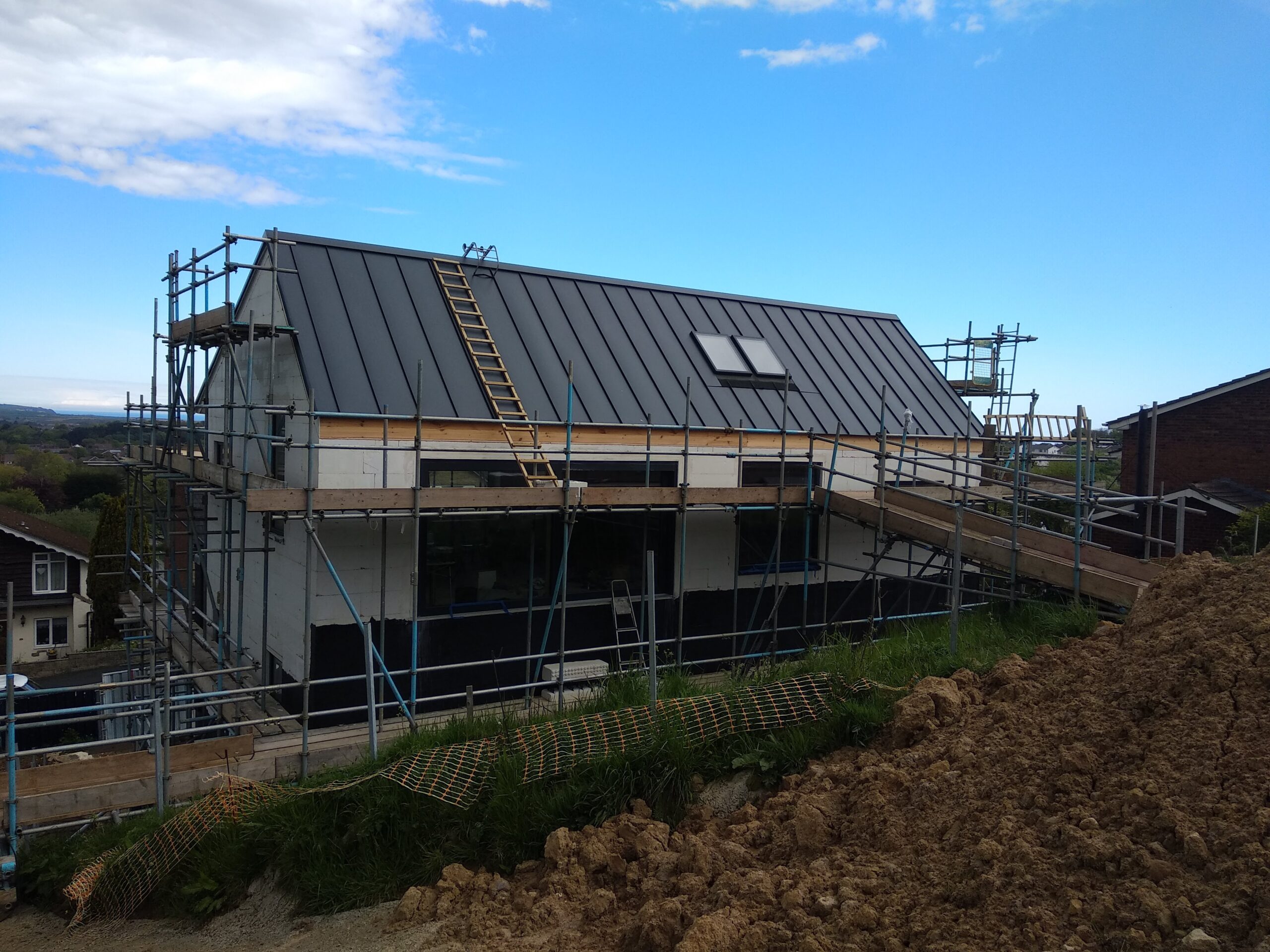
In terms of construction, Insulated Concrete Formwork has numerous similarities to traditional techniques that contractors will already be familiar with. Two facing layers of insulating material (either EPS or Woodcrete) are used to form the building block. These are stacked, without the need for mortar, before concrete is poured into a central cavity.
Despite their shape and size, ICF can support almost limitless designs. The blocks can be shaped to any desired wall profile, including curved walls. The blocks are available in different core widths and sometimes use reinforcing bars to meet almost any engineering design criteria including above and below grade walls.

Build Costs
A common misconception with ICF’s is that build costs are higher compared to traditional methods. However, with material shortages driving up the cost of materials, ICF has increasingly become a cost effective option. In 2021 materials reached a 40 year high. Data from the Department for Business, Energy and Industrial Strategy showed costs were 23.5% higher compared to the previous year. Timber saw one of the biggest increases at 52% while concrete only rose by 17% and ICF by 27%
Delays on site add to the build cost. Insulated Concrete Formwork material lead times are incredibly short with ICFA members holding stock that could be delivered within 48 hours. Labour costs are reduced due to ICF’s simplicity which speeds up the build programme and doesn’t always require the highly paid skills of a bricklayer. The insulating property of the blocks allows the build to continue through winter with the ability to assemble and cast in most weather conditions. The combination of these factors can result in the completion of the walls of a straightforward single storey course in as little as three days. This typically saves up to 60% on labour costs.

Lifetime costs
Of course, upfront outlay is only one consideration in the cost of a property. With Insulated Concrete Formwork, the concrete is encased within the insulating material of the formwork. This enables the concrete to set quickly but cure very slowly and continue to gain strength. Tests have shown that a concrete block typically has a strength of seven newtons. In comparison, an ICF wall is around five times stronger at typically 35 newtons.
This strength creates a durable building which, according to BBA certifications, has a service life of not less than 60 years. Be aware, this is only if the ICF is designed and installed in accordance with manufacturers specifications. However, it is widely understood that the lifespan of ICF property easily extends to more than a hundred years.
Environmental Cost of Insulated Concrete Formwork
With the Government setting a target of net zero by 2050, reducing carbon has become a focus for every business. With construction heavily contributing to total global carbon output, the concrete industry has been making significant changes. Since 1990, they have already achieved a 53% reduction in emissions. Looking to the future, UK Concrete’s Roadmap details their aim to remove more carbon from the atmosphere than they produce.
Building with an insulated solid wall construction can accelerate this roadmap. ICF requires fewer deliveries and reduces the amount of mechanical equipment used during construction. As the concrete is encased within the formwork aesthetics are not important. This allows more waste material to be used in the mix.
The density of an Insulated Concrete Formwork structure offers superior thermal performance. The blocks lock tightly together which enables them to hold in the wet concrete as it is poured. The concrete core sits in direct contact with the insulating block to create an airtight structure with low U values and excellent thermal mass. This results in an ICF properties which reduces the amount of energy used to heat and cool the structure. Monitored energy usage of semi-detached 4-bedroom home with basement with a useful floor area of 110m2 demonstrates heating and hot water costs are on average £250 per year which equates to less than £5 per week.

Disaster Costs With Insulated Concrete Formwork
Recently, the UK has seen adverse weather events resulting in flooding. As a solid wall construction ICF, under BS 85500:2015 Flood Resilient Construction guidance, is a recommended external wall method. If correctly designed and installed, the concrete structure has no voids and creates a watertight shell. In the event of flood damage, the insulating material in the walls remains water resistant which avoids months of delays caused by drying out. ICF structures also require minimal maintenance, don’t support mould growth and can withstand extreme winds.
What’s stopping you?
It’s important to take the correct approach in the design and build of an ICF property. Your supplier should have the knowledge and technical resources to support your project. We recommend involving them early in the process so they can flag up areas that require special considerations. To ensure reliability in construction ICFA members will only supply their product once you have completed a training course with the manufacturer.
To find out more about ICF products supplied by our members visit www.icfa.org.uk/association-membership