
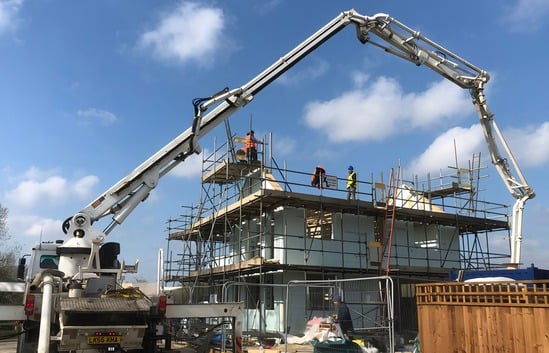
If you’re a developer working on a construction project, there’s a very strong chance you’ve heard of ICF by now. Maybe you’ve heard how building with ICF blocks offers superior property strength, speeds up the build programme or integrates easily into a site. But are you holding back? Based on what members report, five construction obstacle continue to slow wider adoption on UK sites.
When looking at whether you should adopt ICF on your site, the performance argument is not the issue. The built environment obstacles tend to sit elsewhere. We explain each one and explain why ICF is the perfect fit.

What is ICF?
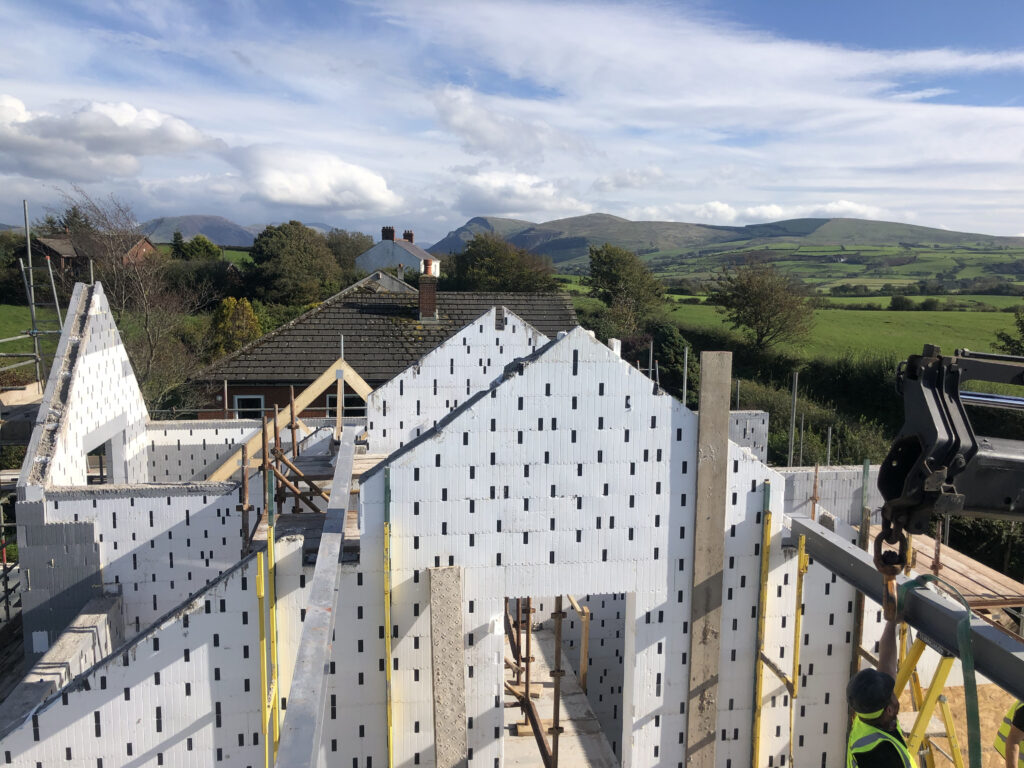
First, let’s explain exactly what ICF is. As an insulated solid wall construction method it is one of the systems included under the ‘Modern Methods of Construction’ umbrella. The in-situ construction method uses lightweight blocks made from two layers of insulating material. To construct the wall, the blocks are stacked and lock together via a raised profile. They are then filled with concrete to form a solid structural wall.
The blocks require no mortar and go together quickly. Once poured, you are left with a highly insulated, durable shell. Whether the system uses EPS panels, moulded blocks or woodcrete units, the outcome is the same: a warm, robust building fabric delivered efficiently.
When used on a modern site, ICF can reduce your reliance on skilled tradespeople while improving build timescales and reducing costs.
Let’s look at the common arguments against using ICF on-site.

Construction Obstacle 1: Established Site Habits
The UK housebuilding and construction sector is traditionally conservative. That is not criticism, it is reality. It’s the reason why brick and block remain the default for most volume and SME builders. Site managers understand it. Trades are organised around it. Programmes are built around it.
When a construction project is under pressure, people tend to revert to what they know. That instinct is often the first hurdle to overcome.
The problem is that developers anticipate that ICF will disrupt the familiarity.
The build method requires bracing. The sequencing around the concrete pour is different. Fixing methods for internal finishes are different. None of these are complicated, but they are not what many site teams have done for the last twenty years.
Yet ICF makes it easier to manage the process from the design phase to the point you get on site. It follows a simple, repeatable pattern, set out, stack, brace, pour – which quickly becomes familiar from plot to plot.
Because structure and insulation are delivered in one operation, the shell goes up faster, and the programme shortens. Rather than adding complexity, ICF provides a controlled and efficient way to introduce a new method without disrupting the flow of the build.
Find out how to build with ICF
Construction Obstacle 2: Training and Labour Assumptions
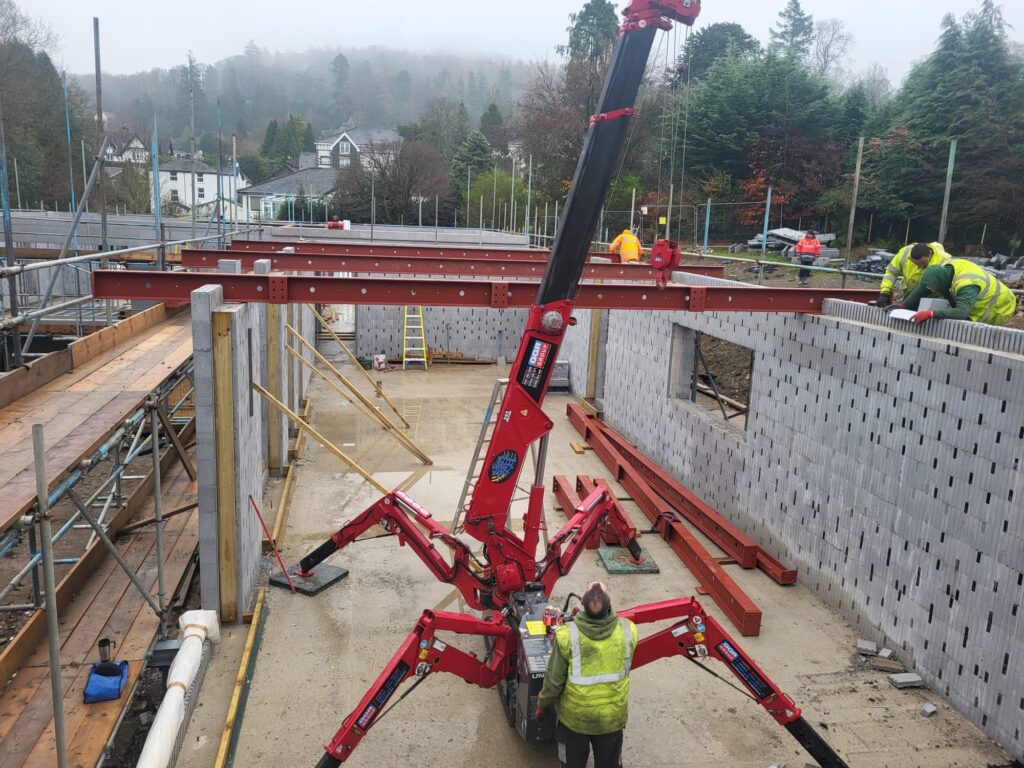
Labour shortages remain one of the biggest headaches for developers and one of the biggest causes of stalled progress on site. When bricklaying teams are unavailable, programmes slip, scaffolding remains in place longer, and follow-on trades are delayed.
Yet, despite these problems, developers still continue to rely on the fact that new training programmes will appear that increase the number of trades. They think that getting a whole crew trained in a new system will take up too much time and money.
In reality, ICF bridges the gap without heavily impacting on site or financial resources. Construction of the ICF walls removes the need for skilled bricklayers; their expertise only required if applying brick as the external finish.
The system is straightforward to teach, making it well-suited to apprentices and newer operatives, while its predictability allows follow-on trades to access plots sooner.
Due to its simplicity of build, ICF easily reduces your reliance on skilled bricklayers. Fewer operatives are required to form and pour walls, helping developers maintain momentum when traditional trades are stretched.
Training is fairly quick, and most of our members offer free 1-day courses when you purchase their system. Several also offer on-site support to help developers overcome any problems that may arise when implementing a new system for the first time.
Even better, it’s the ideal system to keep apprentices engaged on site. Due to its simplicity, apprentices can get stuck in with the construction of a wall and feel a part of the team. The system also reduces reliance on heavy plant equipment making it easier to manage safety protocols.
Some resistance from established trades is not unusual, particularly where long-standing site relationships exist. However, members consistently report that once a team delivers its first construction project successfully, confidence improves and the labour risk argument becomes a clear positive rather than a concern.
Construction obstacle 3: Procurement and Trade Packaging
On a traditional build, responsibilities are divided quite clearly – groundworks, brickwork, carpentry and roofing. Each trade works sequentially, and delays in one package often cascade into the next.
Developers often see issues with inserting ICF into a build because it does not always slot neatly into standard trade packages. Walls are up quicker than traditional systems, concrete deliveries need arranging sequentially, and follow-on trades can get into a much sooner.
On a site where ICF sits alongside properties built using a traditional system, developers can see this as added work. However, from a programming perspective, ICF should be seen as an advantage that greatly minimises downtime.
For a developer, ICF offers the key to keeping a site moving – one that is not held back by labour, extreme weather conditions such as snow and ice or programming issues.
With ICF, the wall structure becomes a more consolidated operation. A specialist installer or trained in-house team can erect and pour in a tightly controlled sequence, allowing follow-on trades to start sooner.
The structure, insulation and often first-fix readiness are delivered in one coordinated phase, reducing trade stacking and shortening the critical path. However, that benefit depends on early planning.
If changes are required to the plans, ICF adjustments can be made right up until the point of the concrete pour. Work can even continue throughout most weather conditions, with even frosty weather rarely stopping construction. The insulating concrete blocks assist during the concrete curing phase by protecting it against so it can set quickly but cure slowly and gain strength.
How to reduce costs on site with ICF
Construction obstacle 4: Perceived Risk Around the Concrete Pour
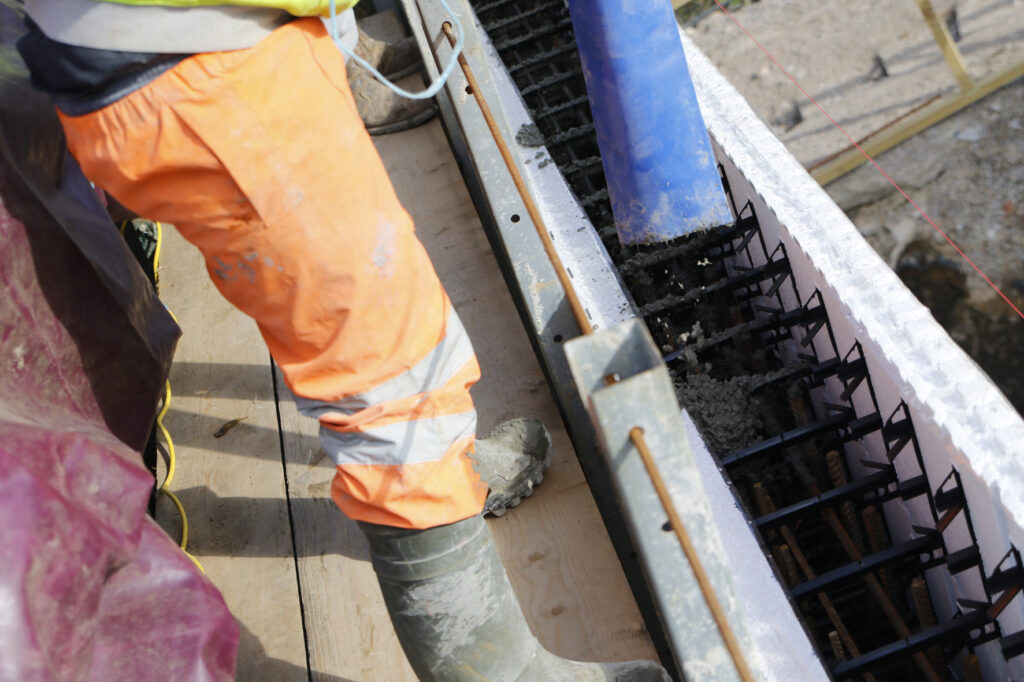
If any developers have heard about a crew building with ICF, they will no doubt have heard of the ‘horror’ stories around the concrete pour. Walls blowing out during the pour, bowed structures, or hidden voids within the block, which could later allow leaks.
The questions raised are typically commercial as much as technical:
- What happens if the formwork moves?
- How do we maintain alignment and tolerance control?
- What if weather conditions change mid-pour?
- Who carries the cost and programme risk if something goes wrong?
In masonry construction, issues tend to be incremental and easier to correct. In ICF, the pour can feel like a single critical event, concentrating risk into a short window. For developers introducing ICF to a new site team, pouring several metres of wall in a single operation can feel like a high-exposure moment in the programme. The rumours alone can make contract managers and site teams cautious, particularly where delivery certainty and margin protection are priorities.
Yet those experienced with the system know that problems at the concrete stage are rare.
The solution lies in the following steps:
- Guidance from experienced ICF manufacturers and suppliers.
- Installer training to ensure the correct amount of bracing is applied to the structure, and the walls are straight.
- Correct concrete consistency to avoid excess pressure on the blocks or the concrete setting too fast inside the pump.

Construction Obstacle 5: Warranty and Mortgage Perception
It is fair to say you are unlikely to face many problems when securing finance or guarantees with a traditional brick and blockwork property.
With ICF it can be different and is possibly one of the biggest obstacles to adopting ICF on a construction project. Surveyors unfamiliar with the method may classify it as non-standard construction. Developers can be asked for additional documentation. Occasionally, buyers raise questions when told the property is not traditional brick and block.
These issues are rarely insurmountable, but they can introduce delay and uncertainty, particularly for SME builders who rely on straightforward sales progression.
The construction industry is quickly changing. Most major warranty providers now have established routes for ICF systems. When you specify that the system is an ‘insulated solid wall construction’ method, many lenders are comfortable with it.
Supporting any build with clear technical data and certification, which reduces most queries before they arise.
If you are facing any problems with warranties or mortgages on an ICF construction project, get in touch with the ICFA. We are working closely with leading construction industry bodies, surveyors and mortgage and warranty providers to educate on ICF systems.
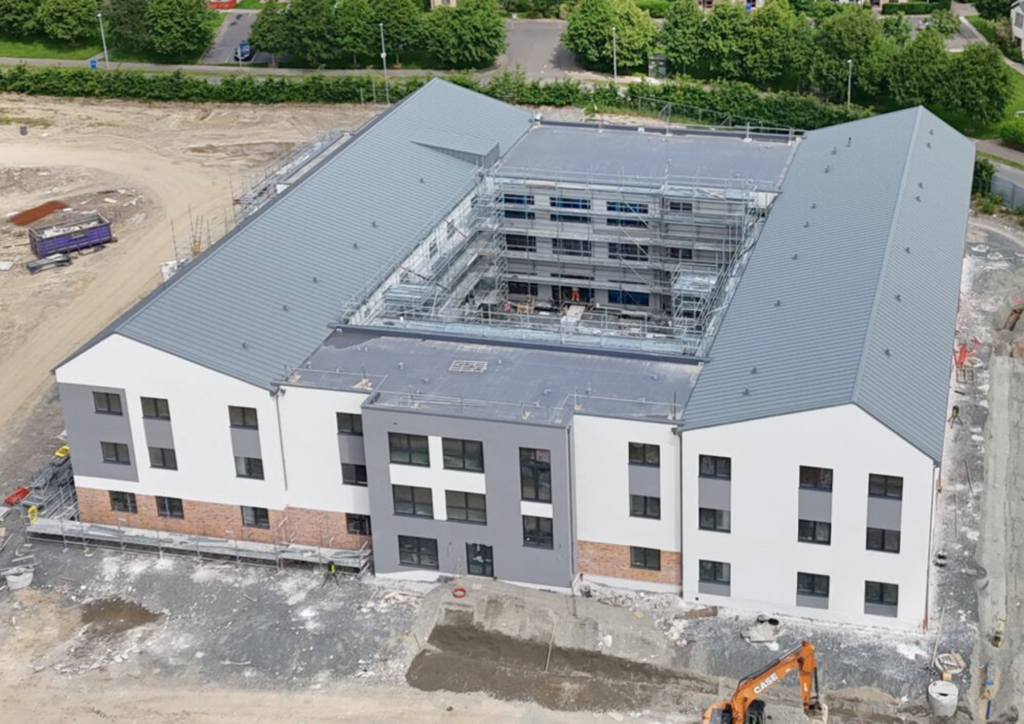
Moving Forward – Building with ICF Blocks
None of these obstacles relate to performance. They relate to habit, perception and process.
As regulatory standards tighten and fabric performance becomes more critical, the advantages of ICF become more obvious.
Achieving low U values and strong airtightness with masonry often requires additional layers, additional trades and tighter supervision. With ICF, much of that performance is inherent in the system.
For adoption to increase, the construction industry needs:
- Consistent training pathways
- Clear guidance on contractual responsibility
- Shared UK programme data
- Ongoing engagement with warranty providers and lenders
The ICFA has a central role in this. By presenting unified technical standards, supporting member training and continuing dialogue with regulators and warranty bodies, confidence can continue to grow.
The obstacles on site are real, but they are not structural weaknesses of the system. They are transitional challenges. As more construction projects are delivered successfully, those challenges become smaller.
ICF does not need to be positioned as radical or experimental. It needs to be presented as lean practices, practical, buildable and commercially sound. One that creates safe sites, supports waste management objectives and construction management.
For those already working with it, the focus now is not proving that it works but making it easier for others to adopt it with confidence.
We’ve talked about the obstacles. Now let’s explore the benefits of ICF.