
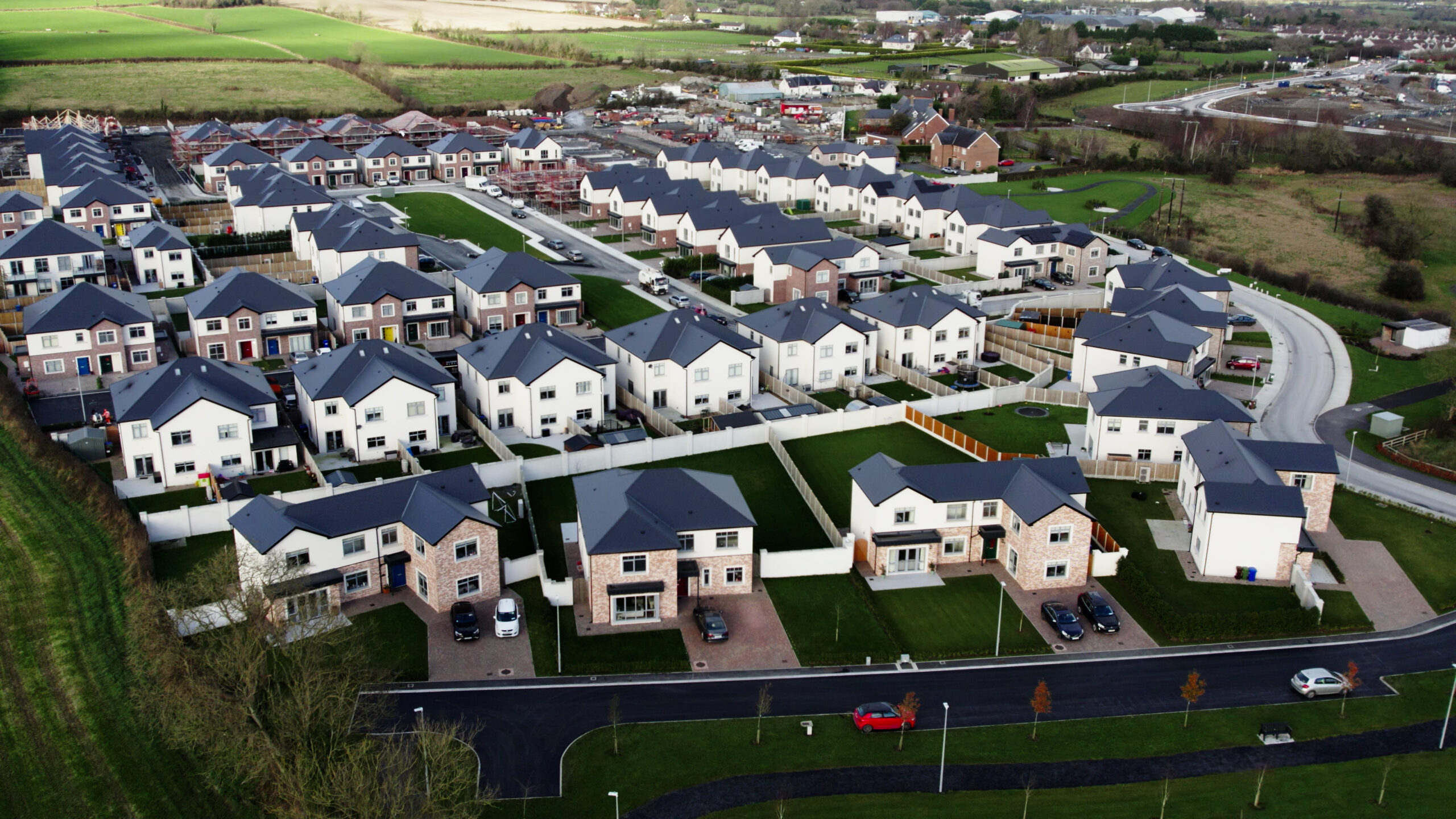
The ICFA sets out why the biggest housebuilding programme in a generation could still fall short, and what needs to change before it is too late.
Earlier this year the government announced seven locations for a new generation of New Towns. Tempsford in Bedfordshire. Leeds South Bank. Manchester Victoria North. Thamesmead. Crews Hill and Chase Park in Enfield. Brabazon and the West Innovation Arc in South Gloucestershire. And an expansion of Milton Keynes.
Each site will deliver at least 10,000 homes. Several are planned for 40,000 or more. The government has called it the most ambitious housebuilding programme in more than half a century, while The Times called it a “housebuilding bonanza.”
We agree it is a significant moment, but we also want to point out that there’s an important question nobody in government appears to be asking. How are these homes going to be built?
Feels like we’ve been here before…
The UK has form when it comes to bold housing announcements that fail to deliver.
The post-war New Towns programme, which gave us Stevenage, Basildon, Harlow and Milton Keynes, still stands as a sort of gold standard. Between the end of the war in 1946 and 1970 it delivered over half a million homes.
But since then, governments have tried and largely failed to repeat its success.
New Labour’s eco-towns. David Cameron’s garden towns and villages. Both fell well short of their ambitions.
The pattern is consistent and the planning is thorough. The targets are set. The announcements are made. And then the homes either do not get built, or they get built far too slowly, because nobody has seriously addressed the question of construction capacity.
That is the conversation we need to have about the New Towns programme right now, while there is still time to influence it.
The skills shortage is not a backdrop; it’s very much the central problem.
The UK construction industry is already struggling to build the homes currently in the pipeline, before a single New Town has broken ground.
A 2026 survey by the Federation of Master Builders found that carpenters, bricklayers and plumbing and HVAC trades are the hardest roles to fill across the industry. Nearly half of builders reported project delays directly caused by the inability to recruit.
Office for National Statistics data puts live construction vacancies at more than 35,000, with over half caused by a genuine absence of skills rather than a lack of candidates.
The government has responded with a £96 million construction training package, and of course we welcome that investment. But training people takes time, and Tempsford alone is expected to deliver up to 40,000 homes.
If the New Towns are built using traditional masonry methods, they will be competing for the same bricklayers, the same plasterers and the same carpenters that every other housebuilder in the country is already struggling to find.
That is not a workforce challenge that more training will fix quickly enough.
The government’s own document does not mention construction method
The New Towns Draft Programme, published on 23 March this year runs to considerable length and covers planning policy, environmental assessment, design principles, transport, green space, affordable housing targets and governance structures.
It just doesn’t address how the homes will be built.
If the construction method is left entirely to individual developers, the default will be traditional build.
And not because it is the best option – but actually because it is the familiar one. A New Towns programme built on traditional methods, in a market already starved of the skilled labour those methods depend on, is a programme that will fall behind schedule before it has properly started.
The government has a window right now to change that. But it needs to act before masterplans are fixed and procurement frameworks set.
New Towns are the ideal place for ICF
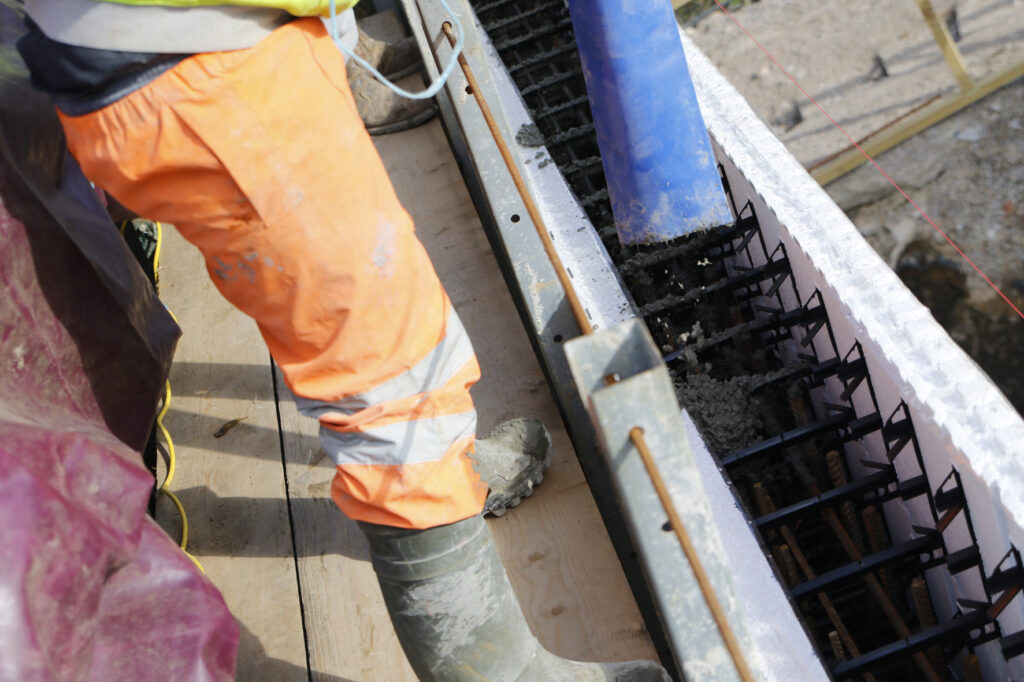
Most construction takes place within constraints. Existing infrastructure. Neighbouring buildings. Planning conditions tied to the character of the surrounding area. Phased sites where multiple contractors are working in sequence.
A New Town has none of those constraints. It starts from nothing. That makes it the single best opportunity in a generation to embed a modern construction method at the planning stage, across an entire community, rather than leaving it as a niche choice for individual developers.
Insulated Concrete Formwork (ICF) is precisely the kind of method that a New Towns programme should be specifying.
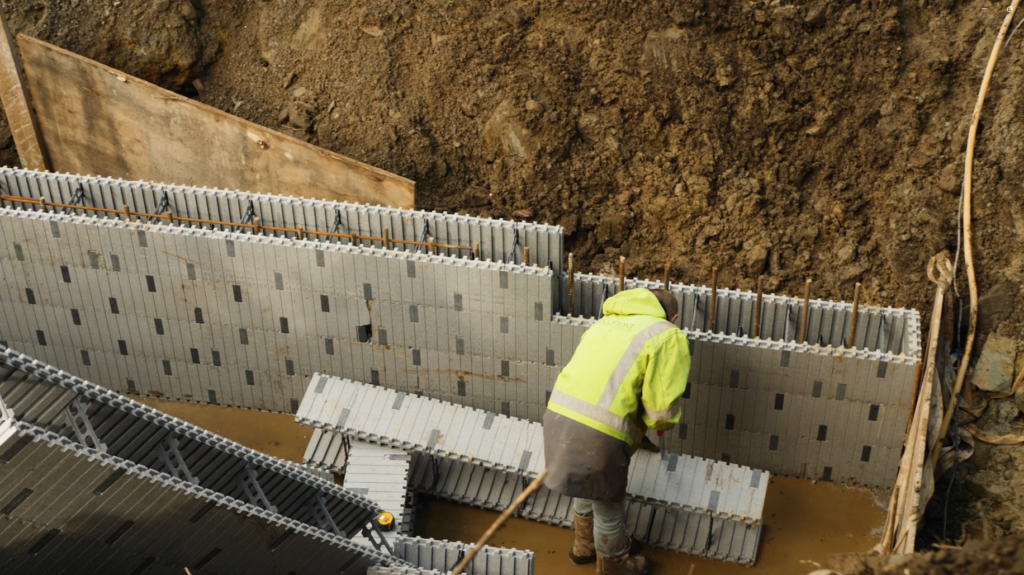
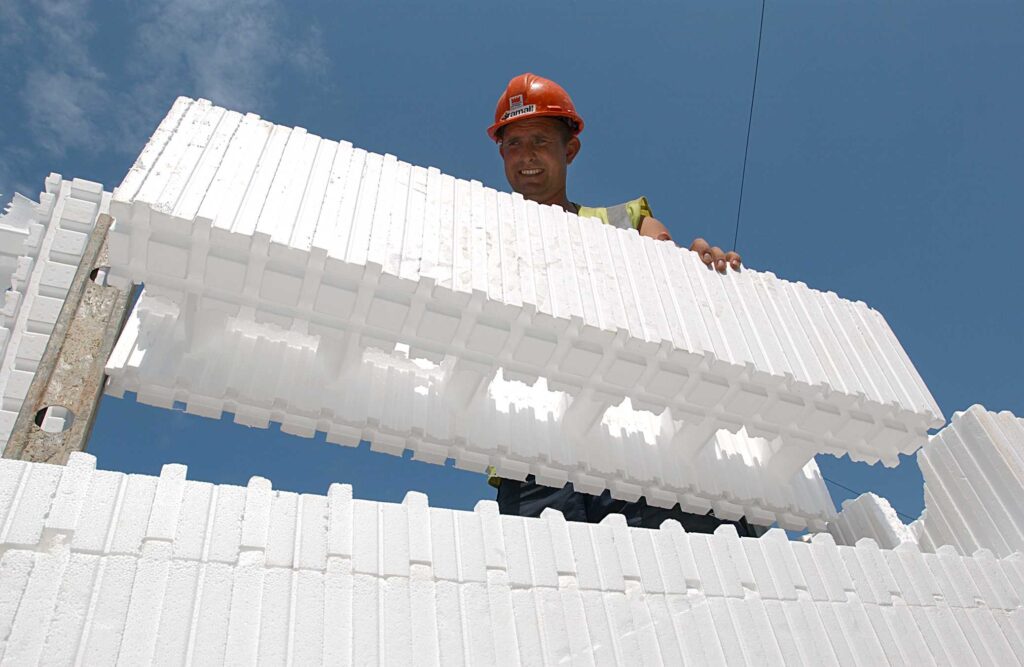
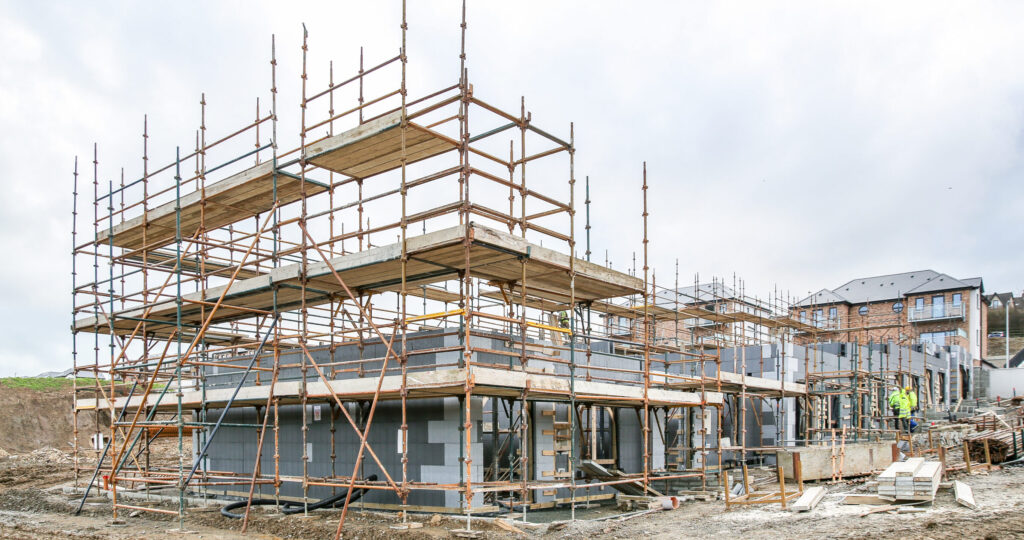
ICF is an insulated solid wall construction method that works by stacking lightweight blocks, made from an insulating material such as expanded polystyrene or woodcrete, to create walls.
The core is filled with reinforced concrete, creating a structure that is strong, and offers excellent thermal performance.
The learning curve is pretty short. The blocks require no mortar and simply interlock, making the system fast to learn and straightforward to build with, even for apprentices.
Crucially, ICF does not rely on the same specialist trades that the rest of the industry is fighting over.
A standard ground-floor structure can be up in days. Because structure, insulation and air barrier are all delivered in a single wall system, many of the sequential stages that slow down traditional build are removed entirely.
The result is a faster programme that is far less exposed to the skills shortage that is currently the biggest single risk to the government’s housing targets.
There are other reasons too
Beyond the skills argument, ICF is a strong fit for the specific challenges the New Towns will face.
Several of the proposed sites carry real flood risk. Thamesmead sits alongside the Thames. Other sites will be built on land that has historically been difficult to develop precisely because of water management. ICF performs exceptionally well in these conditions.
The concrete core resists water ingress in ways that traditional masonry and timber frame construction cannot, and ICF has been used successfully on flood plains across the UK. For communities being planned for the long term, that resilience matters.
On energy performance, the case is equally clear.
The Future Homes Standard requires new homes to produce 75 to 80 per cent less carbon than older properties. ICF walls routinely achieve U-values of 0.18 W/m²K and airtightness levels that meet / exceed the standard without the additional layers that other methods require.
Homes built with ICF will be cheaper to heat and far less likely to require expensive retrofit work in the years ahead.
The government is currently spending £15 billion through the Warm Homes Plan trying to improve the thermal performance of existing homes. The New Towns are a chance to build homes that will never need that kind of intervention. It would be a significant missed opportunity to build them in a way that one day will.
What the ICFA is calling for

We are not arguing that ICF should be mandated as the only permitted construction method across every New Town site. Good planning requires flexibility, and there will be sites and building types where different approaches make sense.
What we are arguing is that modern methods of construction, including ICF, should be part of the explicit conversation at masterplan and policy level for each of the seven proposed locations.
Construction method should sit alongside design quality, energy performance and affordable housing as a core consideration, not an afterthought.
The opportunity to shape how these communities will be built is here.
The ICFA would welcome direct engagement with the Ministry of Housing, Communities and Local Government to make the case for ICF as part of the delivery framework for this programme.
The post-war generation built their New Towns with the best methods available to them at the time. This generation has the opportunity to do something better. The question is whether we are bold enough to use it.
The ICFA has represented manufacturers, suppliers and installers of ICF systems in the UK since 2002.
To find out more about building with ICF or to speak to one of our members, visit icfa.org.uk