
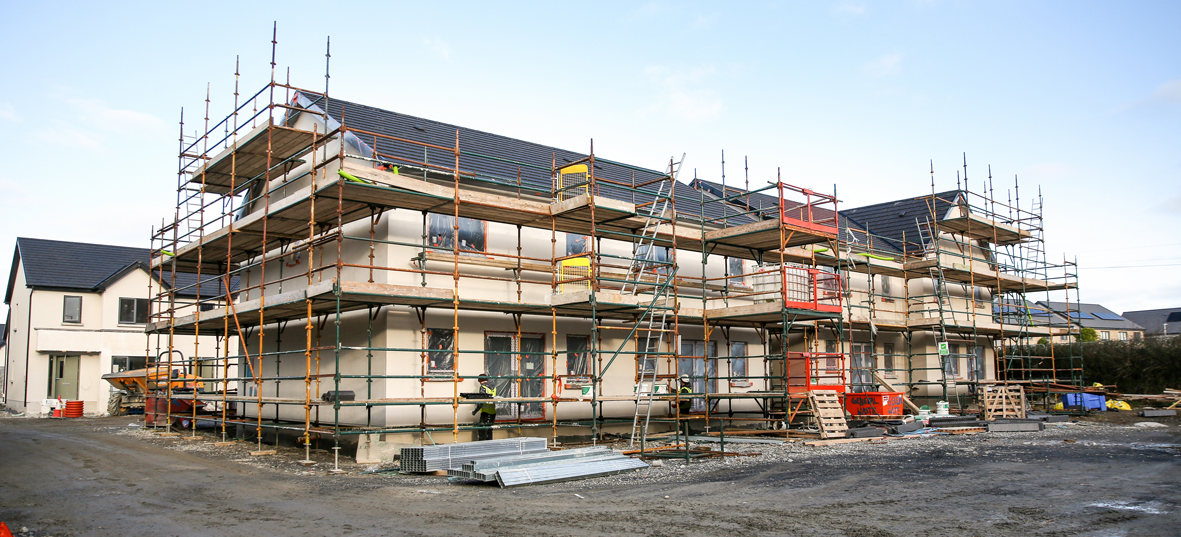
The Future Homes Standard has already changed how new homes must be built.
Now a second, quieter reform is underway that will reshape how those homes are measured once they are built.
In January this year, the UK Government published its partial response to the consultation on the Energy Performance of Buildings Directive, confirming that the familiar single-number EPC rating is being replaced.
For decades now, Energy Performance Certificates (EPC) has meant one letter and one number, a simple cost-based score that told a buyer or landlord roughly how efficient a home was and little else.
That system is now being retired in favour of a multi-metric model, built on a new testing process. It is a significant change, and one the housebuilding industry needs to understand well before it lands.

What does an EPC rating mean?
It is easy to see the Future Homes Standard and EPC reform as two separate stories. They are not.
The Future Homes Standards is working to improve the energy efficiency of a home; an EPC rating measures that performance. Both sit within a wider framework of building regulations that developers and housebuilders need to navigate when designing and constructing new homes.
The Home Energy Model (HEM) is the calculation engine behind both. It already underpins compliance for new homes under the Future Homes Standard, and it will eventually become the basis for every Energy Performance Certificate issued in England – new build or existing stock.
The current EPC system uses a Standard Assessment Procedure (SAP) which blends everything into a single cost-driven figure. As a result of the testing and report method, this skews the actual performance of a property. A well-insulated all-electric home against a poorly insulated one with a heat pump can end up looking similarly attractive on paper.
The HEM reformed system corrects that…a dedicated Fabric Performance metric means the quality of the building envelope, the insulation, the airtightness, the thermal bridging detail, will be visible and assessed in its own right, rather than buried inside a cost calculation that heating choice can distort.

How are EPC testing methods changing?
The distinction between the two testing methods, SAP and HEM, is worth setting out.
What is the Standard Assessment Procedure (SAP)?
The current SAP 10.3 assessment process calculates performance using twelve monthly averages and a set of standardised assumptions. The process looks at the characteristics of a property – size, insulation, heating system and fuel type – and then assesses it against a set of standardised assumptions to estimate energy costs and carbon emissions. The SAP system has been built around predictable inputs such as gas boilers and insulation which do not easily account for newer technology.
That approach can be misleading: a home’s true, real-world performance can end up masked depending on the heating system fitted, regardless of how good the fabric actually is.
What is the Home Energy Model (HEM)?
HEM works very differently. It simulates a home at half hourly intervals across a full year, over seventeen thousand calculation points, using dynamic modelling rather than fixed seasonal assumptions. It also requires specific information on the characteristics of the building, which are then used against the testing. The result is a far more rigorous assessment, one that is much harder for a poorly built envelope to hide behind.
HEM will use a smart readiness score to assess homes separately across four metrics; fabric performance, heating system, smart readiness and cost.
For those of us who have spent years arguing that building performance taking a fabric first approach should come first, not as an afterthought to heat pumps and solar panels, this is a welcome correction.
It also raises the stakes for anyone still treating the building envelope as a box to tick rather than the foundation of everything else.
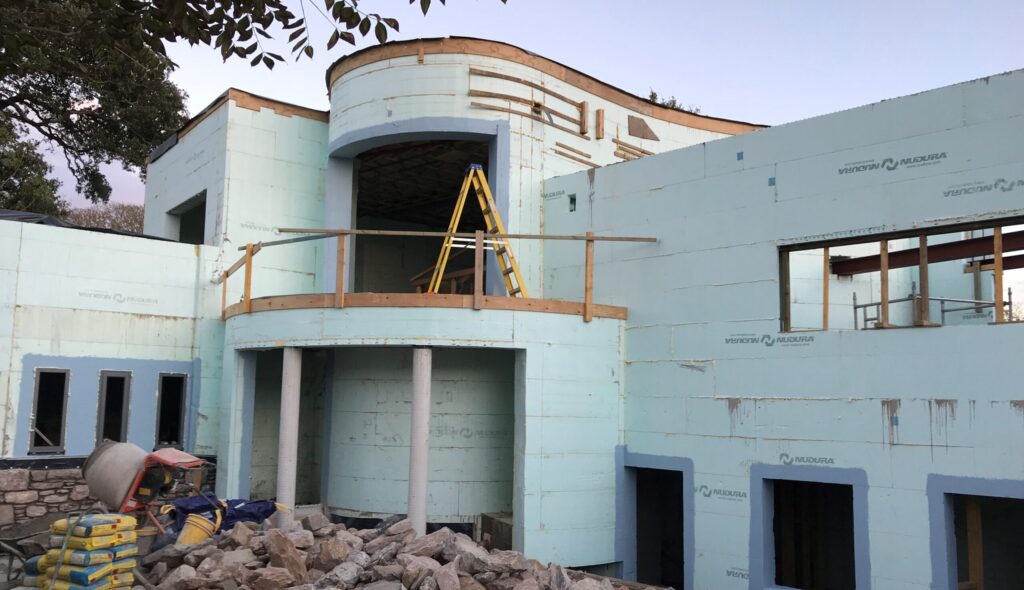
What is a fabric first approach to building?
A fabric first approach means improving the energy efficiency of a building through its physical envelope. The approach looks at how walls, floors, roof, double-glazing windows and doors can increase insulation, air tightness, thermal bridging and optimising solar gain before any other renewable energy solutions are added.
This is precisely where Insulating Concrete Formwork (ICF) becomes relevant, not as a marketing angle but as a practical answer to where fabric first and the EPC reform is heading.
A well-specified ICF wall system typically achieves u-values in the rough region of 0.18 W/m²K or better, comfortably ahead of current backstop requirements, alongside airtightness levels that traditional masonry struggles to match without exceptional site supervision.
Under a scoring system that separates building fabric from heating and rewards consistent and verifiable performance, that really matters.
It is far harder for an ICF envelope to underdeliver than it is for a site-built masonry cavity wall, where performance depends heavily on how carefully every junction, tie and seal was executed on the day. The combination of simplicity of an ICF build, where the wall is built by interlocking the blocks together, the two layers insulation and a concrete core offer solid consistency.
As the reformed EPC ratings starts to reward homes that perform as designed rather than merely as specified, the gap between building methods that close the performance gap and those that do not will become far more visible to property owners, valuers and lenders alike.
The timeline for the new EPC
The timeline has moved more than once. The reformed EPC was originally expected in October 2026, then pushed back to the second half of 2027, with an exact date still to be confirmed.
For new-build compliance SAP 10.3 remains the sole methodology for now. The Home Energy Model is due to run alongside it for a twenty-four month transition once approved, before eventually becoming the only route.
SAP is set to be phased out entirely once that dual-running period ends. On the current timetable that puts full retirement of SAP, and a HEM only regime, somewhere around 2029.
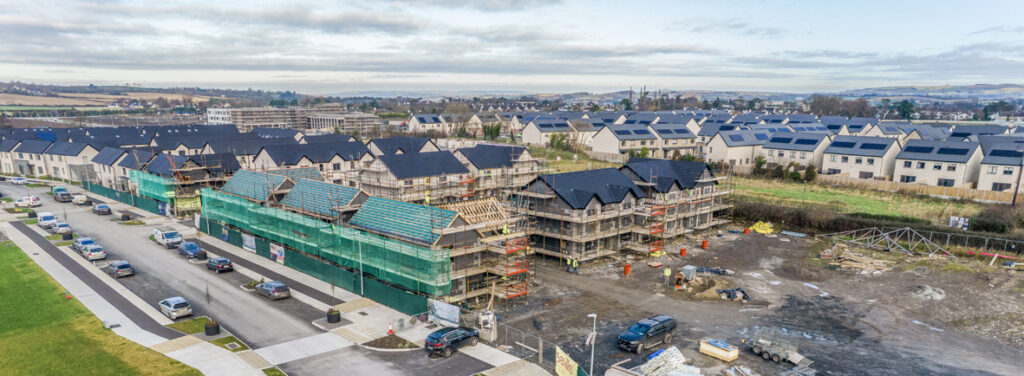
What developers should do now
Property developers should not see the 2029 deadline as a reason to wait.
For the UK property market, homes designed and specified today using a fabric first approach will still be standing, and still being valued, bought and sold, long after the reformed EPC becomes the norm. A home built now with strong, verifiable fabric performance will score well under both the current system and the one coming after it.
Every element within the build will impact a significant section of the HEM score; from build quality and airtightness to low-carbon technologies, double or triple glazing, solar panels and Mechanical Ventilation Heat Recovery (MVHR) systems. The economics of technologies such as solar can also be influenced by mechanisms such as the feed-in tariff, although the focus of the new EPC system is broader than simply the financial return from renewable generation. All require new skills and a revised way of working, impacting on an already stretched workforce.
My advice to developers and specifiers is the same advice I gave when the Future Homes Standard itself was published – do not treat fabric performance as a variable to be optimised around cost. Rather treat it as the fixed point that everything else within the EPC, is built upon.
ICF gives that fixed point a solid, repeatable answer, and as EPC reform starts to reward exactly that kind of consistency, the case for building it in from the outset only gets stronger.
Christopher Stride is Chairman of the Insulating Concrete Formwork Association (ICFA), the UK trade body representing manufacturers, suppliers and installers of ICF systems.
The ICFA provides independent technical guidance on ICF construction for developers, architects, contractors and self-builders.