
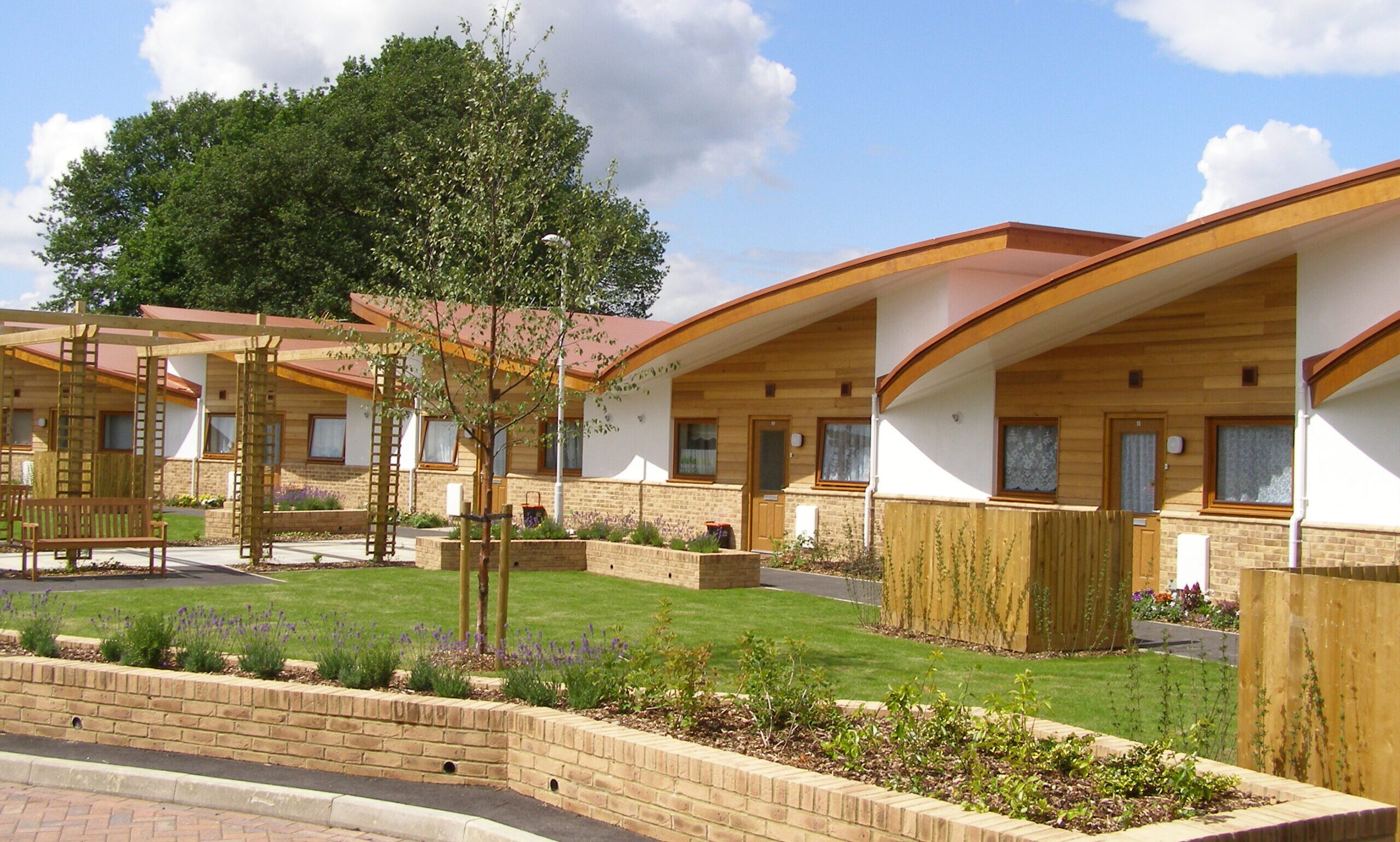
In January the average UK house price broke £300,000 for the first time in history. That’s a number which landed in major headlines, which is no surprise overall.
While this rise in property prices unsurprisingly landed in major headlines, it failed to recognise a secondary issue. How do we value a property?
Take the story of two homes on the same street, with the same number of bedrooms. The same square footage and post code. And yet, despite being the same, they’re worth very different amounts of money. The difference is not a new kitchen or a loft conversion, it is something invisible, something buried in the walls themselves – energy performance.
Because how a property is built and its energy efficiency is reshaping how property is valued, how mortgages are assessed, and what buyers will accept.
The EPC premium is real, and it is growing
An Energy Performance Certificate rates a home from A to G. Most people regard theirs as a piece of paper generated at the point of sale, filed away, and forgotten. That attitude is changing.
Research from Rightmove analysing 300,000 properties that sold twice over a fifteen-year period, found a measurable green premium in resale values once EPC ratings improved.
Moving from an F to a C adds closer to 15%. At current average UK house prices, that lower-to-upper shift represents an increase of over £45,000 in real terms.
An A or B rated home, according to multiple analyses of UK market data, can carry a premium of up to 14% over an equivalent property rated at the lower end of the scale.
That is not a marginal difference. For a home purchased at the UK average price of just over £300,000, a 14% premium represents more than £42,000 of additional value. Not from a renovation. Not from location. From the thermal performance of the building fabric.
For years, the energy performance premium was regarded as a theoretical benefit, interesting on paper but slow to show up in actual transaction data. That is changing. You might say that the emotional calculus of purchasing a home has shifted.
The mortgage market is paying attention
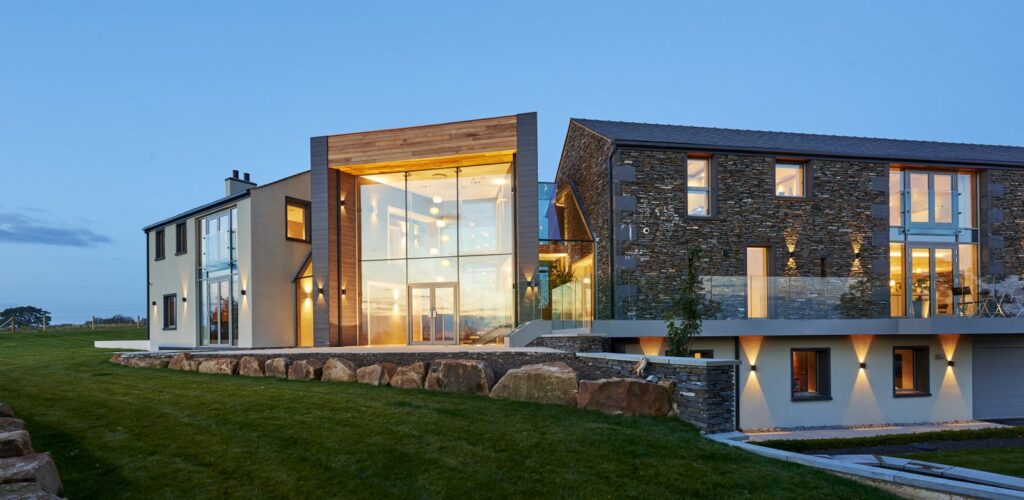
The financial sector has moved, quietly but meaningfully, to reflect this new reality.
Green mortgage products now offer preferential rates to buyers purchasing properties with higher EPC ratings. Lenders know that an energy-efficient home carries lower financial risk for the borrower. Lower running costs mean more disposable income and a home less exposed to energy price volatility. From an underwriting perspective, that matters.
Lenders are competing for business. And increasingly, energy performance is one of the variables in that competition.
The direction of travel is clear. Properties that perform badly on energy efficiency will become harder to finance, harder to sell, and harder to justify at asking price.
The Future Homes Standard changes the baseline
Fortunately for anyone looking to buy a new home, new building regulations are coming into force that will change development attitudes.
From 24 March 2027, the Future Homes Standard comes into force in England.
New homes must be zero-carbon ready. Heat pumps become the default heating system. Solar PV is mandatory in most cases. Airtightness standards tighten considerably.
What this means in practice is that the gap between homes built to the new standard and those built even a few years earlier will become increasingly visible to buyers, mortgage assessors, and valuers. The stock of conventionally built homes that struggle to reach EPC C will grow relatively less attractive as new-build supply begins to skew firmly toward EPC A and B.
For anyone building or buying today, this is not a distant regulatory concern. It is a present financial consideration.
A new way of measuring performance is coming too
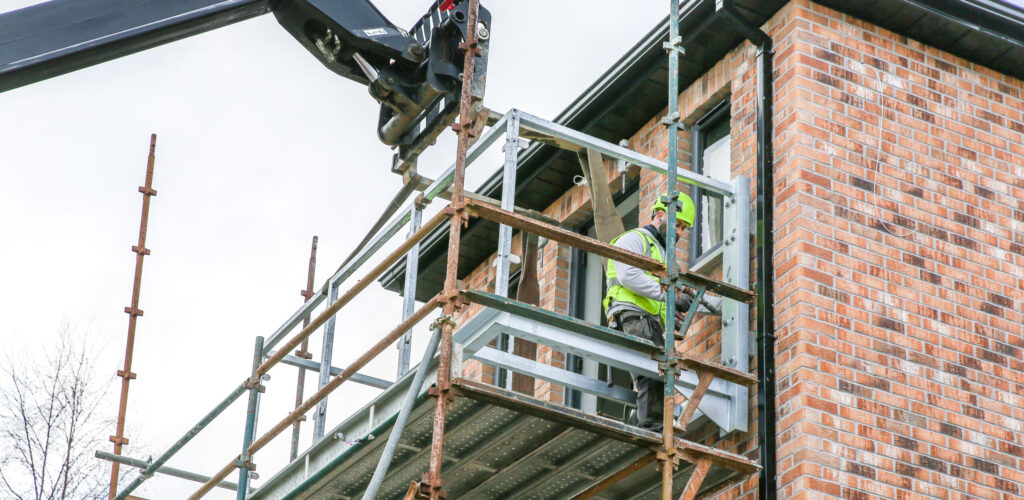
The way homes are assessed is also changing. The familiar A to G rating on an EPC is currently generated by the Standard Assessment Procedure, or SAP, a methodology that has been in place since the 1990s. From next year SAP begins to be replaced by the Home Energy Model, (known as HEM) which will be introduced alongside the Future Homes Standard.
HEM will rate homes across four separate criteria, one of those being fabric performance and the inherent thermal mass of the walls, floors and roof.
For most homeowners, the mechanics of how a home is tested will never be a talking point. But the shift matters. Under the current system, a strong heating system can mask a mediocre building envelope within one blended score. Under HEM, the quality of the fabric will be measured and reported in its own right. Homes built with genuinely high performing fabric will finally get full credit for it, and homes without it will have nowhere to hide.
This where developers, and homeowners, will need to change the approach to how a home is built.
An ICF home – performance baked in from day one
The best approach is a ‘fabric first’ design which looks at maximising the energy efficiency of a property by first considering how the fabric of the building performs. This includes maximising thermal insulation, improving airtightness and sound proofing.
This is where an ICF construction excels.
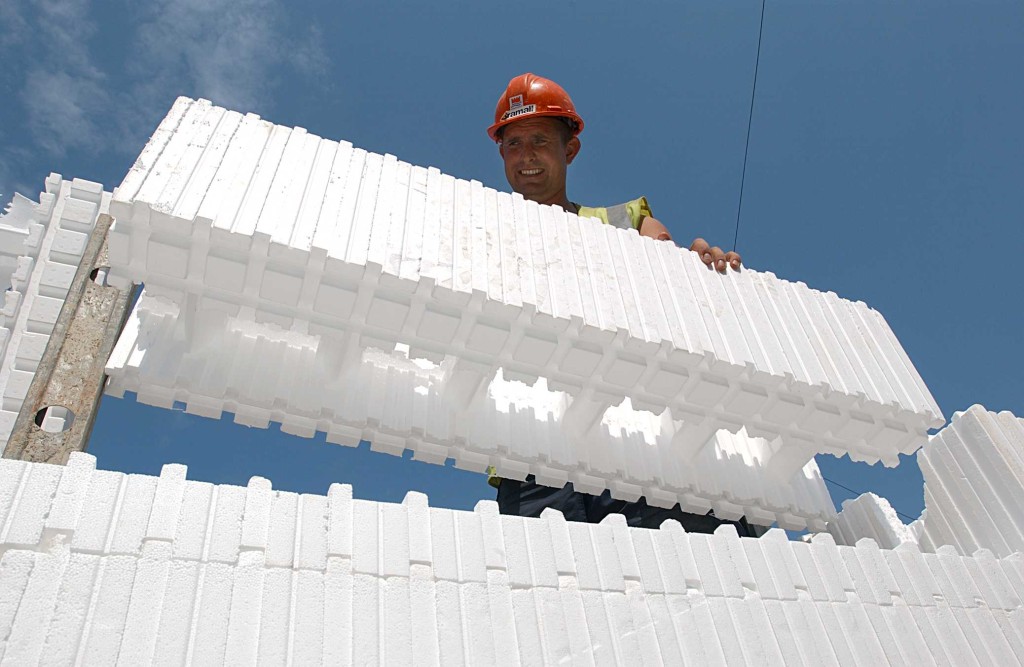
Insulated Concrete Formwork (ICF) has been used in the UK for over fifty years. It is not a new technology. But it is one whose moment has arguably arrived. An ICF house is built from interlocking blocks formed of an insulating material that are filled with reinforced concrete. This removes a weakness that can be present in conventional cavity wall construction where leaks appear at the wall ties, lintels, joist ends, and window reveals. With ICF, the reinforced concrete core sits in direct contact with the insulation to create a continuous structure without breaks and thermal bridges.
The result is a building fabric that performs at a level most buyers have never experienced.
U-values of 0.18 W/m²K are routinely achieved. Airtightness of 0.33 m³/m²/hr at 50 Pa has been demonstrated on completed ICF projects.
In practical terms, this translates to comfortable living spaces and energy bills that can be up to a whopping 70% lower than in homes built to previous standards.
A home that maintains consistent internal temperatures, without the cold-bridging and draughts that characterise poorly detailed new builds. And an EPC rating that will sit comfortably in the A or B band as a natural consequence of the build method.
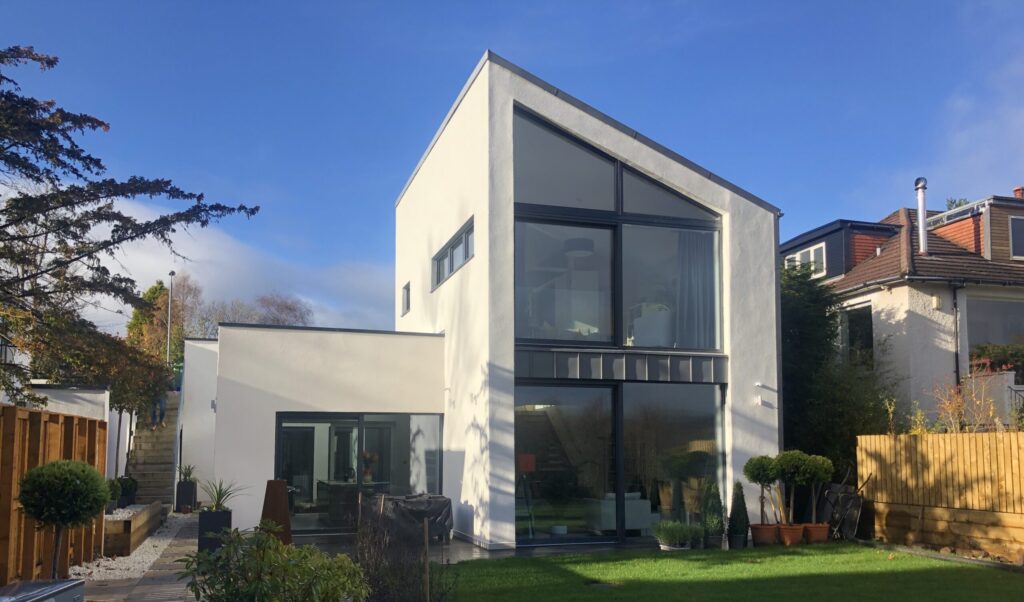
Efficiency is no longer a lifestyle choice
Ten years ago, buying an energy-efficient home was something you did because you cared about your carbon footprint, and in general that framing still has value. But it is no longer the primary reason the market is shifting so much. Buyers are motivated by running costs. Lenders are motivated by risk. Valuers are beginning to reflect energy performance in their assessments. And legislators have drawn a clear line in the regulatory sand for 2027.
Energy performance has become a financial asset. The homes that carry it will be worth more, sell more easily, and age more gracefully in a market that is only going to place greater weight on it over time.
Two identical homes on the same street. One is warm, quiet, and costs a fraction of the other to heat and cool. The other will need significant investment to reach compliance with standards that are now law.
They are not the same house. And they will not be worth the same amount for much longer.
FAQ
What is ICF?
ICF is an insulated solid wall construction method which has been used in construction projects for over 60 years. The system uses blocks made from an insulating material combined with a solid concrete inner core.
What ICF blocks are available?
In the UK, ICF blocks are either made from Expanded Polystyrene (EPS) or Woodcrete. EPS insulation blocks are lighter than woodcrete blocks and are available either pre-moulded and ready for immediate construction or flat panels which, once on site, connect with ties to form the block. Woodcrete blocks are formed from cement-bonded wood fibre material which is moulded to create the block.
What energy savings can an ICF home offer?
Combining a concrete core with the formwork’s insulating material, ICF structures typically achieve U-values at around 0.18 W/m²K and lower. The direct contact between the concrete and insulation also minimises thermal bridging with well-detailed structures, achieving a Y-value as low as 0.02 W/(m2.K) when assessed with certified junction psi value and air tightness of 0.33m³/h.m² at 50 pascals.
What fire rating is available with an ICF home?
Depending on the roof and floor specification, the concrete core in an ICF wall will act as an almost impenetrable shell that contains a fire and limits it from spreading internally or externally. ICF buildings can offer fire protection with a 4-hour rating.
What steps are involved when building with ICF?
The ICF construction installation process involves stacking the block on site to create the wall structure. Architectural details that required additional strength such as large openings or retaining walls may require reinforcing steel bars inserted into the blocks (check with your manufacturer). The walls are usually built in stages (typically first floor height) before the first concrete pour. Concrete is then poured via a concrete pump into a central cavity. Once set, the build continues in stages until full building height is achieved.
How much does it cost to build an ICF home?
Prices can vary depending on the size of the property, system manufacturer and insulation levels however, ICF material costs are comparable with traditional build methods. The true cost saving on an ICF build is through the speed and number of contractors needed on a site. It is possible to construct a simple ground floor in only three days using two contractors.
The Insulating Concrete Formwork Association represents ICF specialist suppliers of Insulated Concrete Form building systems across the UK. All ICFA member systems are mortgage-recognised by the Valuation Panel of the Council of Mortgage Lenders. For more information, visit icfa.org.uk